
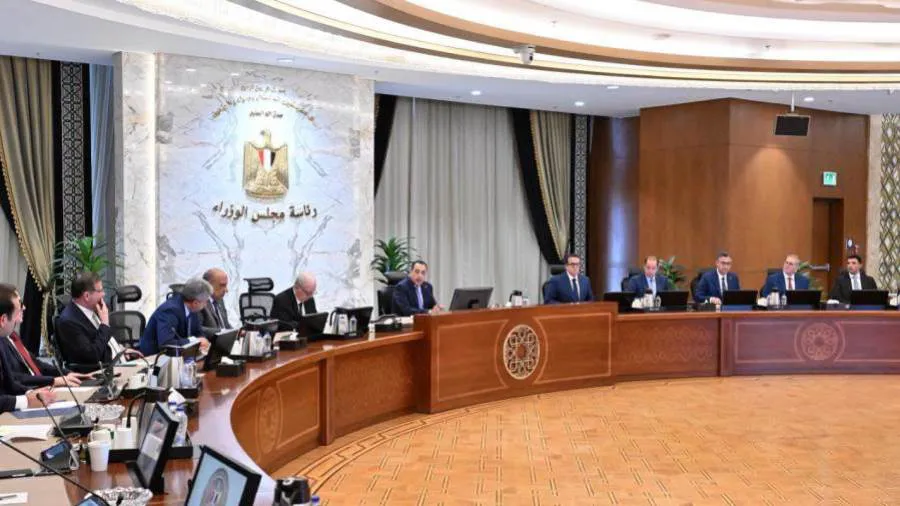
Prime Minister Dr. Mostafa Madbouly today chaired a meeting of the Central Crisis Management Committee at the government's headquarters in the New Administrative Capital. The meeting followed up on the fallout from escalating geopolitical developments in the region and their impact on global markets, amid pressure from rising prices and disrupted international supply chains. It also reviewed the position of strategic reserves of basic goods and products, medicines, medical supplies and fertilizers, discussed ways to secure domestic needs and strengthen readiness for any regional or international developments, and examined plans to expand solar-energy transition initiatives and speed up the rollout of incentives to boost Egyptian exports.
Attendees included Dr. Hussein Eissa, Deputy Prime Minister for Economic Affairs; Dr. Khaled Abdel Ghaffar, Minister of Health and Population; Eng. Mahmoud Esmat, Minister of Electricity and Renewable Energy; Ahmed Kouchouk, Minister of Finance; Sherif Fathy, Minister of Tourism and Antiquities; Dr. Sherif Farouk, Minister of Supply and Internal Trade; Alaa El-Din Farouk, Minister of Agriculture and Land Reclamation; Eng. Karim Badawi, Minister of Petroleum and Mineral Resources; Dr. Ahmed Rostom, Minister of Planning and Economic Development; Eng. Khaled Hashem, Minister of Industry; Dr. Bahaa El-Ghannam, head of the Future of Egypt Agency for Sustainable Development; Yasser Sobhy, Deputy Minister of Finance for Fiscal Policies; Rami Aboul Naga, Deputy Governor of the Central Bank of Egypt (CBE); Dr. Tarek El-Kholy, Deputy Governor of the CBE; Maj. Gen. Islam Radwan, Director of Crisis Management at the Armed Forces Operations Authority; and Ambassador Nazih El-Naggari, Assistant Foreign Minister and Director of the Department of Research, Assessments, Political Planning and Crisis Management.
Counselor Mohamed Adel, the official spokesperson for the Cabinet, said the meeting followed developments in the escalating geopolitical events in the region and their potential repercussions. Against this backdrop, Dr. Mostafa Madbouly directed that safe stocks of food commodities and various petroleum products be increased to ensure that needs are met in light of regional developments.
The spokesperson added that Dr. Madbouly also directed a faster rollout of incentives and measures aimed at increasing Egyptian exports, in line with the recommendations and outcomes of the "Egypt Forum 2026". These include updating the export rebate program, increasing export support for promising sectors and raising allocations for shipping to target markets, all of which would help make Egyptian products more competitive and support their access to foreign markets.
Counselor Mohamed Adel explained that the meeting discussed plans to expand solar-energy transition initiatives, reflecting the state's push to expand new and renewable energy projects and rely more on clean, sustainable energy sources. This is in line with the "Egypt Forum 2026" targets for expanding such projects and bringing installed capacity to nearly 30 gigawatts by the end of 2028.
He noted that the meeting reviewed the current position of strategic reserves of basic goods and products, as well as medicines, medical supplies and fertilizers. It was confirmed that strategic stock levels of these products are safe and reassuring, reflecting the availability of the necessary supplies.
Adel said the meeting also discussed rising tensions and geopolitical events on the international stage and the growing challenges they pose to the global economy, given turmoil in energy markets, supply chains and international trade, and higher transport and shipping costs. These factors are affecting trade flows, production costs and prices in many countries.
The spokesperson added that these developments have revived inflationary pressures and pushed up the prices of a number of food commodities, basic products and fuel on global markets, increasing the economic burden on countries and households, particularly countries that rely on imports to meet part of their needs. This underscores the importance of continuously monitoring global market developments, securing the state's strategic needs and strengthening readiness for any developments that could affect the availability or cost of goods.

Comments
No comments yet. Be the first!