
Ahmed Rostom:
We are targeting a structural shift in growth towards production and exports. The Egyptian economy grew 5.1% by the end of the last fiscal year.
Ongoing engagement with financing institutions to draw on their accumulated expertise in supporting the reform process.
Innovative long-term financing instruments for the private sector and a dedicated pillar to support start-ups.
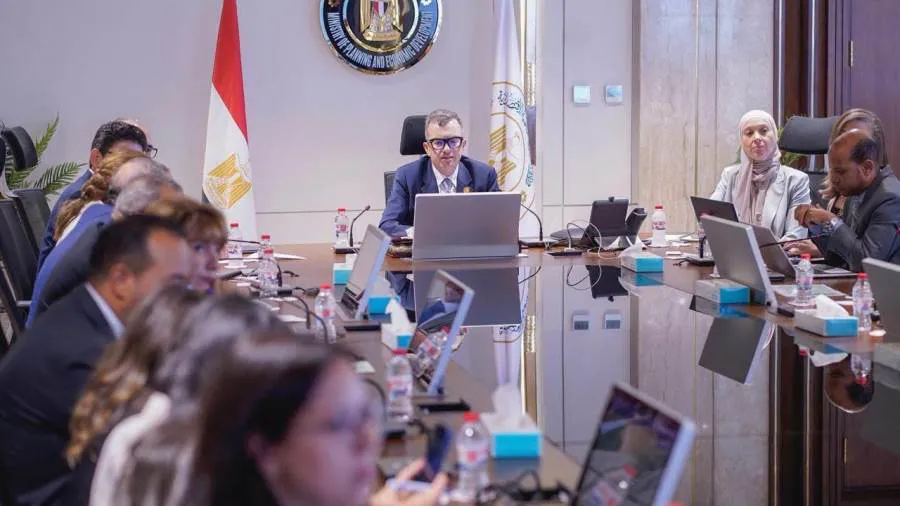
Ahmed Rostom, Minister of Planning and Economic Development, held an expanded meeting with representatives of major financial institutions and rating agencies in Egypt to review macroeconomic developments and current performance indicators, and to present the outlines of the National Programme for Economic Transformation.
The meeting, organised in coordination with the Ministry of Foreign Affairs, International Cooperation and Egyptian Expatriates, drew high-level participation from leaders and representatives of the United Nations, the World Bank Group, the International Monetary Fund, the European Bank for Reconstruction and Development (EBRD), the African Development Bank (AfDB), the International Finance Corporation (IFC), the European Union, the International Labour Organization (ILO), the Japan International Cooperation Agency (JICA), the Swiss Agency for Development and Cooperation (SDC) and the Islamic Development Bank Group, as well as a number of representatives of international rating agencies.
Opening the meeting, Rostom said it reflects the government's commitment to continuous engagement and the exchange of expertise and views with international financing institutions and credit rating agencies. He explained that despite slowing global growth and regional geopolitical tensions, the Egyptian economy has shown notable resilience, with growth of 5.1% by the end of the last fiscal year, 2025/2026, and positive indicators continuing into the current fiscal year.
Rostom noted that the "National Programme for Economic Transformation" was built on existing sectoral strategies, the Industrial Development Strategy and the National Employment Strategy. He stressed that the programme acts as a growth accelerator and aims to shift the economy from reliance on consumption towards production, exports and investment, with continued coordination with the Ministry of Finance, the Central Bank and the ministries to respond immediately to all global changes.
Rostom also announced that coordination is under way to develop the legal and legislative frameworks for commercial arbitration, to improve the investment climate and protect investors' rights. He added that the programme also includes comprehensive targeting of support for entrepreneurship, start-ups and high-growth businesses to strengthen their competitiveness.
Rostom affirmed the continuation of the structural reforms included in the "State Ownership Policy Document" and the government offerings programme, to make room for the private sector to lead growth. This goes alongside expanding innovative long-term financing instruments, diversifying funding sources and boosting liquidity to facilitate the expansion of national and private projects, and broadening the tax base electronically.
Comments
No comments yet. Be the first!