

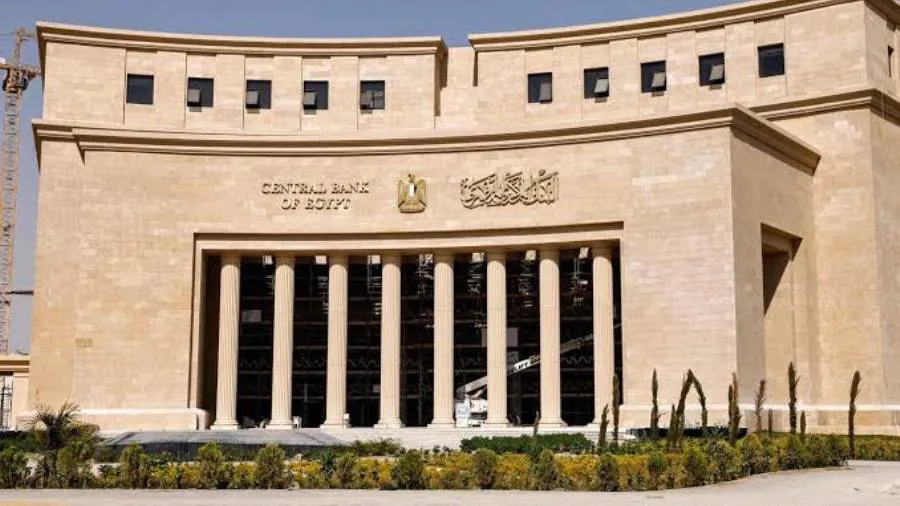
The Central Bank of Egypt's (CBE) Monetary Policy Committee (MPC) will hold its seventh meeting of 2026 next Thursday, 29 October 2026, to decide on deposit and lending interest rates, after keeping them unchanged at its last meeting in September. Institutions and investment banks increasingly expect rates to be held at their current levels.
Financial institutions and investment banks expect the CBE to leave interest rates unchanged at its upcoming meeting, given inflationary pressure from rising global oil and commodity prices and the pound's decline against the dollar, which reduces the chances of resuming the monetary easing cycle for now.
Deutsche Bank expects the CBE to hold interest rates at their current levels at its meeting at the end of this week.
Markets are awaiting the MPC's interest rate decision on 29 October 2026, amid pressure on the pound and concerns that geopolitical tensions could push inflation higher, even though annual inflation slowed to 13.9% in September.
At the meeting, the committee is expected to review domestic and global economic developments as well as monetary and financial conditions, analyzing economic indicators to take the decisions needed to achieve financial stability and economic growth.
At its September meeting, the CBE's MPC decided to keep key policy rates unchanged. The overnight deposit rate, overnight lending rate and the rate of the CBE's main operation were held at 19.00%, 20.00% and 19.50%, respectively, and the credit and discount rate was kept at 19.50%. The decision reflected the committee's assessment of the latest inflation developments and outlook, as well as changes in the surrounding risks.
Reasons for Holding Interest Rates
Globally, economic activity slowed slightly, weighed down by geopolitical volatility and weak demand, but remained supported by continued growth in trade and investment. Inflation remains generally elevated, although the intensity of inflationary pressure varies across economies, prompting central banks to pursue cautious monetary policies in line with prevailing economic conditions.
In commodity markets, energy and agricultural prices rose as regional tensions escalated and supply concerns mounted. Overall, the global economic outlook is uncertain and remains exposed to a range of risks, chief among them continued regional tensions, further tightening of financial conditions and renewed supply-chain disruptions.
Domestically, real economic activity continued to grow at a moderate pace, with growth of 4.7% in the second quarter of 2026 versus 5.0% in the first quarter, mainly due to the fallout from regional tensions. As a result, real GDP growth averaged 5.1% in fiscal year 2025/2026 and is expected to remain broadly stable at that level in fiscal year 2026/2027. Output nonetheless remains below potential, although it is expected to gradually approach it during the second half of 2027.

Comments
No comments yet. Be the first!