
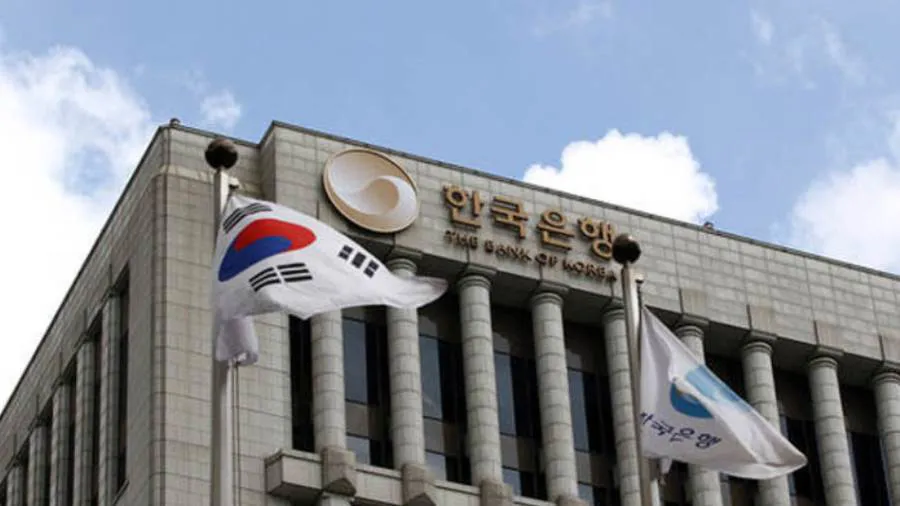
South Korea's central bank decided to keep interest rates at 3% at its meeting on Thursday, in line with analysts' expectations, following two consecutive hikes, amid persistent inflation pressure and growing uncertainty over global economic developments.
In a statement, the central bank said the hold is intended to assess the effects of the two previous increases and to monitor domestic and external risks, particularly the fallout from the conflict in the Middle East and shifts in monetary and fiscal policy in major economies.
The decision matched the expectations of economists polled by Reuters, while analysts noted that the hold does not necessarily signal a shift in the course of monetary policy, with inflation remaining high.
Inflation in South Korea
Inflation in South Korea, Asia's fourth-largest economy, came in at about 2.9% last September, remaining above the central bank's 2% target; it has been at or above that level for 13 months.
Bank of Korea Governor Shin Hyun Song said last week that the bank will keep monetary policy restrictive until there are sufficient signs of inflation returning to target, noting that prices have risen markedly because of cost pressures and stronger demand.
The housing crisis and its impact on monetary policy
The rate hold comes as challenges in the housing market mount. The central bank pointed to continued growth in housing-related loans and a renewed acceleration in home prices in the capital, Seoul, and its surrounding areas.
These developments coincide with South Korean President Lee Jae-myung's efforts to boost housing supply; according to reports, he has called for comprehensive measures to increase the number of available homes.
The central bank faces the challenge of balancing efforts to contain inflation with monitoring the risks from rising property prices and mortgage lending, amid continuing uncertainty over global economic conditions and the course of monetary policy in major economies.

Comments
No comments yet. Be the first!