

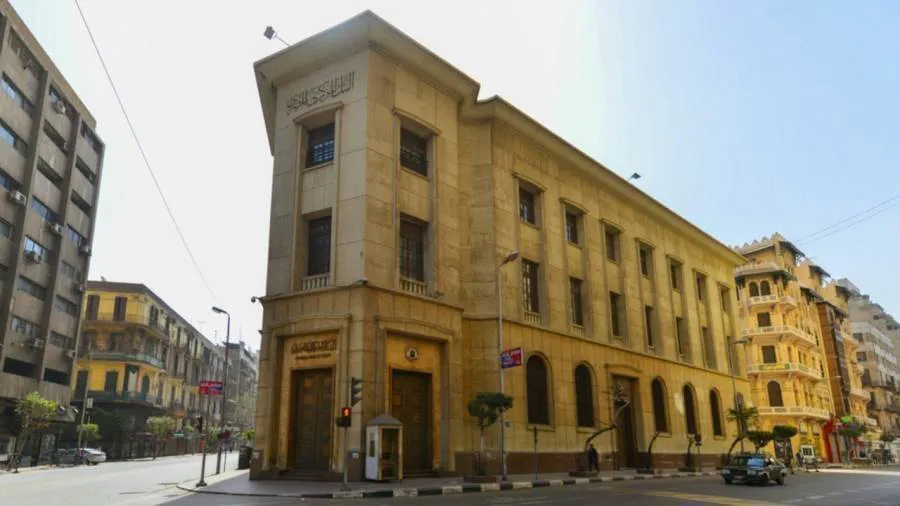
The Central Bank of Egypt's (CBE) Monetary Policy Committee will hold its seventh meeting of 2026 next Thursday, 29 October 2026, to decide the fate of deposit and lending interest rates, after keeping them unchanged at its last meeting in September.
At the meeting, the committee is expected to review domestic and global economic developments as well as monetary and financial conditions, analysing economic indicators to take appropriate decisions to achieve financial stability and economic growth.
At its September meeting, the CBE's Monetary Policy Committee decided to keep key policy rates unchanged. The overnight deposit rate, overnight lending rate and the rate of the CBE's main operation were held at 19.00%, 20.00% and 19.50%, respectively. The credit and discount rate was also kept at 19.50%. The decision reflected the committee's assessment of the latest inflation developments and expectations, as well as changes in the surrounding risks.
Reasons for holding interest rates
Globally, economic activity slowed slightly, affected by geopolitical volatility and weak demand, but remained supported by continued growth in trade and investment. Inflation remains generally high, although the intensity of inflationary pressure varies across economies, prompting central banks to pursue cautious monetary policies in line with prevailing economic conditions.
In commodity markets, energy and agricultural prices rose on the back of escalating regional tensions and supply concerns. Overall, the global economic outlook is uncertain and remains exposed to a range of risks, chief among them continuing regional tensions, further tightening of financial conditions and renewed supply-chain disruptions.
Domestically, real economic activity continued to grow at a moderate pace: growth came in at 4.7% in the second quarter of 2026, compared with 5.0% in the first quarter, mainly because of the repercussions of regional tensions. Real GDP growth therefore averaged 5.1% in fiscal year 2025/2026 and is expected to remain broadly stable at that level in fiscal year 2026/2027. Output nonetheless remains below potential, although it is expected to approach it gradually during the second half of 2027.
The expected output gap therefore suggests that demand-side inflationary pressure will remain limited in the short term, supported by an appropriately restrictive monetary policy stance.
On inflation, annual headline inflation eased slightly to 14.5% in August 2026, driven by lower food inflation, which limited the impact of higher electricity tariffs and rents. Annual core inflation, meanwhile, remained relatively stable at 14.9% in August 2026, reflecting broadly stable prices across core food items, consumer goods and services.
Annual price developments point to a continued downward trend in inflation, supported by broad-based stability across the components of the consumer price index basket over the past three months, with monthly headline inflation at -0.4%, 0.0% and 0.1% in June, July and August 2026, respectively.

Comments
No comments yet. Be the first!