

The Information and Decision Support Center reviews the views of experts and specialists on ways to support and strengthen digital transformation and improve the quality of government services
Recommendations to expand outsourcing services and use artificial intelligence to boost the competitiveness of the Egyptian economy
Emphasis on integrating government databases and offering easier, more inclusive digital services to all segments of society
The need to develop specialised training programmes to prepare human resources for the requirements of digital transformation
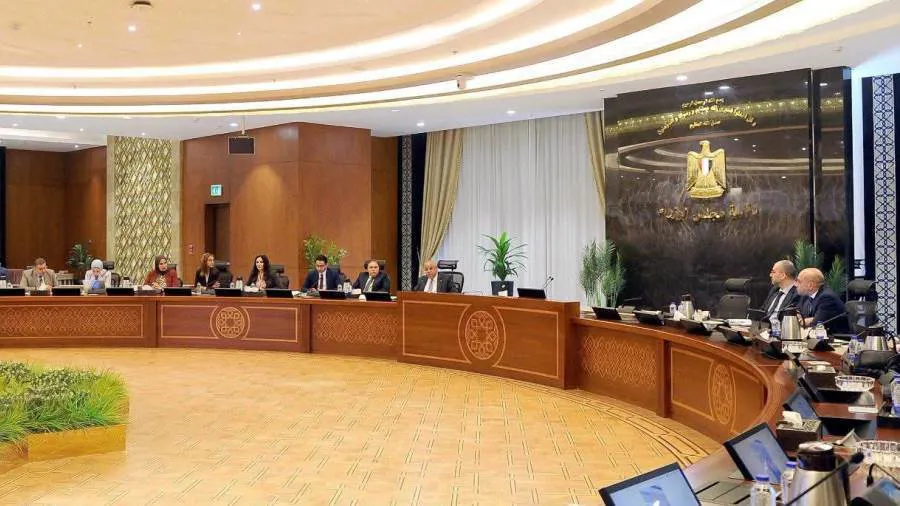
Continuing the preparatory workshops held by the Cabinet's Information and Decision Support Center (IDSC) ahead of "Egypt Forum 2026", to be held from 19 to 24 October, the center organised a workshop on the evening of Monday, 12 October. It was attended by representatives of think tanks and a group of experts, specialists and stakeholders concerned with digital transformation, the development of digital government services and the efficiency of the digital economy.
The workshop covered four main themes. The first focused on the quality of digital government services and the completion of transactions, including digital identity, e-signatures and digital payments, as well as testing the journey of setting up a company. The second addressed data integration, governance and digital trust, with a focus on applying the "once-only" principle and preparing for the end of the grace period under the Data Protection Law. The third discussed access to digital services, connectivity quality and digital skills, drawing on users' experiences and the challenges they face in completing services independently. The fourth focused on the role of the digital economy and artificial intelligence in boosting the competitiveness of businesses, and its impact on costs, certainty, productivity, financing and skills.
The session aimed to discuss the current state of digital government services and identify the main challenges affecting their quality and accessibility, to explore ways of strengthening integration between databases and embedding governance and digital trust, and to examine users' needs and what is required to empower them to benefit from digital services. It also sought to explore opportunities to use digital transformation and artificial intelligence to support business competitiveness and improve the business environment, with the goal of drawing up a set of priority recommendations to help develop the digital government services system and enhance its economic and social impact.
On the requirements for developing the digital transformation system, Eng. Hany Mahmoud, former Minister of Communications and Information Technology, stressed the importance of measuring the actual impact of the "Digital Egypt" platform by tracking the number of users and how much they benefit from its services, to help assess and improve the system's efficiency. He emphasised the need to develop and train human resources to meet the demands of digital transformation, noting that separating service providers from service seekers through digital systems significantly reduces corruption. He added that Egyptian citizens are able to absorb and use modern technology, but this requires designing user-friendly programmes and apps that take the needs of ordinary citizens into account and make it easier for them to access services. He also praised the extent of the modernisation at Egypt Post, while warning of the risks artificial intelligence may pose to humanity and stressing the importance of Egypt preparing for these shifts by building knowledge and awareness and providing the information needed to deal with their challenges.
On strengthening national capabilities that support digital transformation, Dr. Hossam Osman, Deputy Minister of Higher Education and Scientific Research, said Egypt has substantial capabilities in its public and private universities and research centres, along with infrastructure and information systems that support digital transformation efforts. He noted that Egypt is home to innovation clusters ranked among the best in the world, stressing the importance of measuring their impact on developing industry, increasing exports and supporting comprehensive development. He also called for a national programme to prepare society to deal with artificial intelligence applications and the demands of digital transformation, stressing the need to develop human skills and strengthen digital capabilities so that the opportunities offered by digitisation can be seized across all fields.
Along the same lines, Dr. Basma El-Haddad of the Institute of National Planning stressed the importance of designing training programmes tailored to employees, taking into account their needs and the nature of their work, to help them accept change and adapt to the demands of digital transformation. She noted that the "Digital Egypt" platform was created primarily to serve citizens, which means users must feel its positive impact directly, whether through lower costs for obtaining services or less time needed to complete them. She stressed the need for a clear digital transformation strategy with a defined vision and measurable goals, along with clear performance indicators and an integrated monitoring and evaluation system, to ensure progress is measured and opportunities for improvement are identified.
On maximising the economic opportunities of digital transformation, Dr. Abdel Wahab Ghoneim, adviser to the UK's Cambridge College, pointed to the positive progress Egypt has made in outsourcing services, stressing the importance of establishing a major economic zone specialised in this field to attract leading global companies and benefit from growing demand for outsourcing. He also said Egypt has good digital infrastructure, which supports opportunities to expand these services and strengthens the Egyptian economy's ability to benefit from the opportunities offered by the digital economy.
Dr. Doaa Khaled, head of the Electronic Transactions Security Sector at the Information Technology Industry Development Agency (ITIDA), focused on what is needed to strengthen trust in digital transactions, stressing the importance of providing a digital identity for every citizen to support the expansion of digital services and enhance the reliability of electronic transactions. She also highlighted the e-signature project and its role in supporting digital transformation, noting that activating it on a wide scale requires a comprehensive digital transformation of transactions, which would simplify procedures and improve the efficiency of service delivery.
On using digital services to support the business environment, Dr. Mohamed Hamza El-Husseiny, chairman of the Egyptian Industrial Development Association, called for investors' commercial registers and licences to be made available through the "Digital Egypt" platform, to simplify procedures and improve the investment climate. He also stressed the importance of integrating economic data by linking the relevant government bodies and agencies, to enhance information sharing and improve the efficiency of decision-making. He called for wider automation of the industrial sector and industrial companies, to help modernise working methods, raise operational efficiency and boost the competitiveness of Egyptian industry.
On the user experience, Dr. Hala Zayed, a professor at Egypt University of Informatics, praised the "Digital Egypt" platform, stressing the importance of increasing the number of citizens using it to make greater use of the available digital services. She also stressed the need to provide centres to help citizens and give them the necessary support if they encounter any difficulties or obstacles while using the platform, making it easier for them to access services and strengthening their trust in the digital system.
Continuing the focus on making services accessible to all segments of society, Dr. Heba Atef of the National Center for Social and Criminological Research stressed the importance of making digital services available to all groups in society, with particular attention to the elderly, to ensure they can access and benefit from these services. She emphasised the need to develop digital platforms and make them easier to use in line with citizens' differing needs and abilities, along with strengthening media awareness to educate them on how to use the platforms and benefit from the services available on them. She also stressed that the cost of obtaining digital services should be kept affordable for citizens, to broaden their use and achieve digital inclusion.
On the sustainability and continuity of digital services, Dr. Eng. Tarek Mohamed Attia, an ICT consultant, praised the quality of the digital services provided to citizens, pointing to the marked improvement in Egypt's digital infrastructure, particularly fibre-optic and mobile networks. He stressed the importance of providing more than one connectivity path or fibre-optic line for entities that provide vital services, such as banks, to ensure service continuity and reduce outages caused by connection losses or system downtime.

Comments
No comments yet. Be the first!