
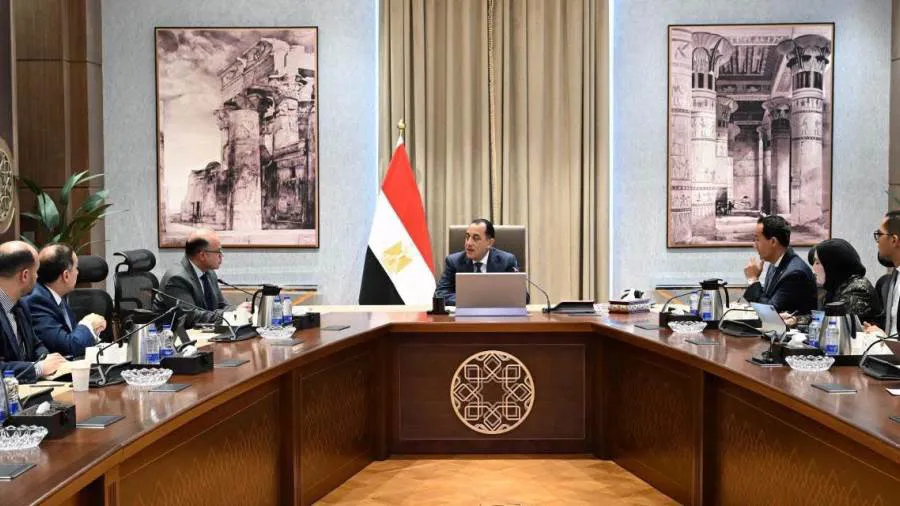
Prime Minister Dr. Mostafa Madbouly held a meeting to review the outline of Egypt's foreign direct investment strategy (2027–2030), attended by Dr. Mohamed Farid, Minister of Investment and Foreign Trade, Dr. Mohamed Awad, CEO of the General Authority for Investment and Free Zones (GAFI), and ministry officials.
Opening the meeting, the Prime Minister said that attracting foreign direct investment flows is a cornerstone of the government's work program and a central pillar for achieving the goals of economic reform and comprehensive, sustainable development, in line with the ongoing directives of President Abdel Fattah El-Sisi. He stressed that the state is pressing ahead with building a competitive and attractive investment climate based on advanced infrastructure, packages of incentives and facilitation, and empowering the private sector as the engine of growth, in order to localize industry, transfer technology, maximize production and export capacity and strengthen the resilience of the national economy.
During the meeting, Dr. Mohamed Farid, Minister of Investment and Foreign Trade, explained that the strategy was prepared in response to instructions from the Supreme Council for Investment, chaired by President Abdel Fattah El-Sisi, to set a framework for strengthening the role and investments of the private sector and attracting more foreign direct investment.
The minister noted that the strategy followed a participatory approach, based on extensive consultations with the relevant state institutions and agencies and direct, in-depth dialogue with private-sector representatives through targeted sectoral workshops. Industry federations, unions, professional bodies, business associations and investment companies took part, alongside specialized interviews with industry experts and the support of sector specialists from the World Bank and the International Finance Corporation in Egypt.
Dr. Mohamed Farid then reviewed the strategy's main pillars and foundations, explaining that it included a diagnosis of Egypt's investment climate, an analysis of global investment trends and promising sectors, and the identification of priority sectors to promote in order to attract and direct capital to them, as well as clear targets for increasing private-sector investment and foreign direct investment flows through 2030.
The minister explained that the strategy includes effective targeting of investment opportunities and implementation of the proposed reforms, alongside comprehensive automation of the services provided to investors to simplify procedures and save time and effort.

Comments
No comments yet. Be the first!