


As part of the Egyptian state's vision to strengthen economic and financial integration with fellow African countries, Hassan Abdalla, Governor of the Central Bank of Egypt (CBE), took part in the "El Alamein–Africa Business Forum". Hosted by Egypt in New Alamein City and opened by President Abdel Fattah El-Sisi, the forum brought together a number of heads of state and government, senior officials, business leaders, representatives of financial institutions and of the public and private sectors, as well as investors and businesspeople from across the African continent.
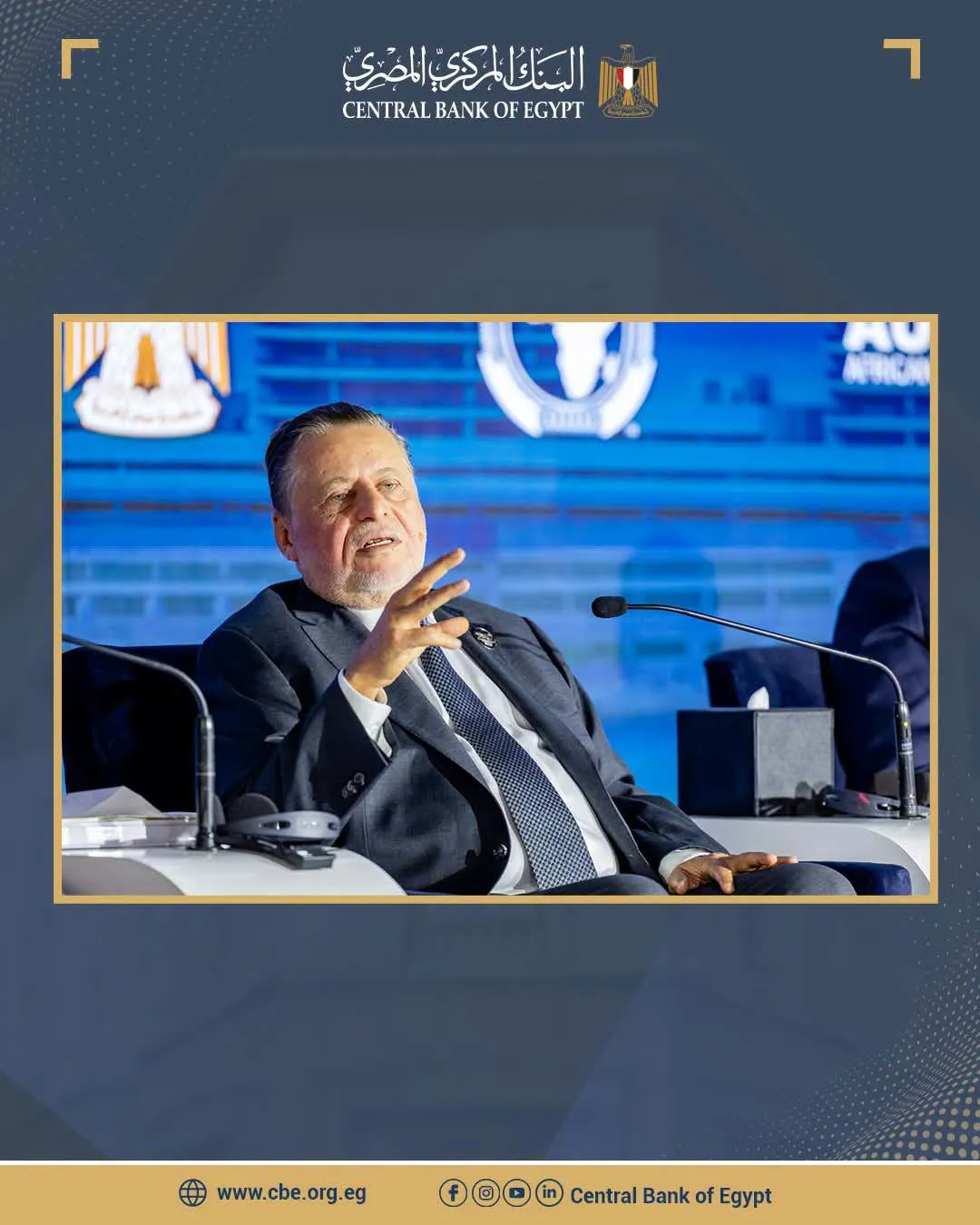
On Saturday, the Governor was a keynote speaker at a high-level session titled "A New Growth Compact for Africa in a Turbulent World", alongside Deogratius John Ndejembi, Vice President of Tanzania, and Corneille Karekezi, Group Managing Director and CEO of the African Reinsurance Corporation (Africa Re). The session addressed the main challenges facing African economies and ways to boost sustainable growth and support financial and investment integration across the continent.
Opening his remarks, the Governor said Africa needs to build trust, strengthen joint financial cooperation and create enough jobs to absorb its fast-growing youth population, which is at once the continent's greatest opportunity and its most important responsibility. He noted that about 12 million young people enter Africa's labour market every year, while only about 3 million formal jobs are created, which makes it necessary to equip them with the education and skills they need to become a driving force for economic growth rather than a challenge to it.
The Governor called on African countries to adopt stable and predictable economic policies, along with clear economic frameworks and specific, measurable plans that build credibility and give investors and companies a clear view of what to expect. He stressed that building confidence in the economy is essential to attracting investment and achieving sustainable growth.
Turning to the continent's financial architecture, the Governor said Africa needs stronger and more efficient financial markets, with a focus on easier access to finance, more robust banking systems, and more efficient mechanisms for assessing African investments and creditworthiness. He underlined the importance of improving African countries' credit ratings and establishing an African credit rating agency, which would help African economies access financing and investment on more efficient terms.
He also stressed the importance of boosting trade and cross-financing among African countries, noting that a large share of African capital leaves the continent for advanced markets before returning at a higher cost. This, he said, calls for increasing the circulation of capital within the continent and making the most of its financial resources.
The Governor also highlighted the importance of expanding the use of local currencies and increasing the volume of intra-African trade conducted in African currencies, rather than relying entirely on foreign currencies. He explained that starting to settle part of trade exchanges in local currencies could be a practical, gradual step toward this goal, supporting trade and investment and strengthening financial ties across the continent.
In light of this vision, the Governor reviewed the positive results achieved by Egypt's economic reforms, pointing to improvements in a number of economic and financial indicators. These include Egypt's net foreign reserves rising to unprecedented levels and improved capital adequacy ratios at Egyptian banks, reflecting the strength and resilience of the banking sector, supporting a stable business environment and a better investment climate, and reinforcing the banking sector's ability to keep financing economic activity and sustainable development.
As part of Egypt's effort to turn this vision into practical steps, the Governor said Egypt is working to strengthen financial and banking ties with African countries, noting that at least 15 memoranda of understanding have been signed with African central banks for cooperation in several areas, including training and governance. He added that Egyptian banks are also expanding their presence in African markets by opening credit lines and providing financing facilities, supporting the development of capital-market operations, increasing liquidity and backing investment within the continent.
The CBE Governor also stressed the need to lower barriers between African countries and ease the movement of goods and people across borders, including cutting the time needed to release goods and complete customs clearance, as a key factor in boosting intra-African trade and investment.
He emphasised that Africa needs measurable, actionable commitments rather than mere discussion, pointing to a number of practical targets, including directing 10% of African bank liquidity toward investment within the continent and channelling 5% of international reserves into investment inside Africa.
The CBE Governor concluded by stressing that strengthening financial and banking cooperation among African countries, together with developing financial markets, increasing intra-African trade and easing capital flows, is an essential path to harnessing the continent's vast potential and turning its population and youth growth into a sustainable economic and investment force.
The "El Alamein–Africa Business Forum" is held pursuant to a decision of the African Union summit in February 2026 to convene the forum every two years in New Alamein City. It aims to move from identifying Africa's development priorities to mobilising the resources, investment and partnerships needed to turn those priorities into tangible projects and practical results, and it facilitates direct contact between governments, business communities, investors and financing institutions.
The forum coincides with a series of high-level African events hosted by Egypt in New Alamein City, including the summit of the founding states of the African Union Development Agency (AUDA-NEPAD) on Saturday, 3 October, and the 8th African Union Mid-Year Coordination Meeting today, Sunday, 4 October 2026.


Comments
No comments yet. Be the first!