
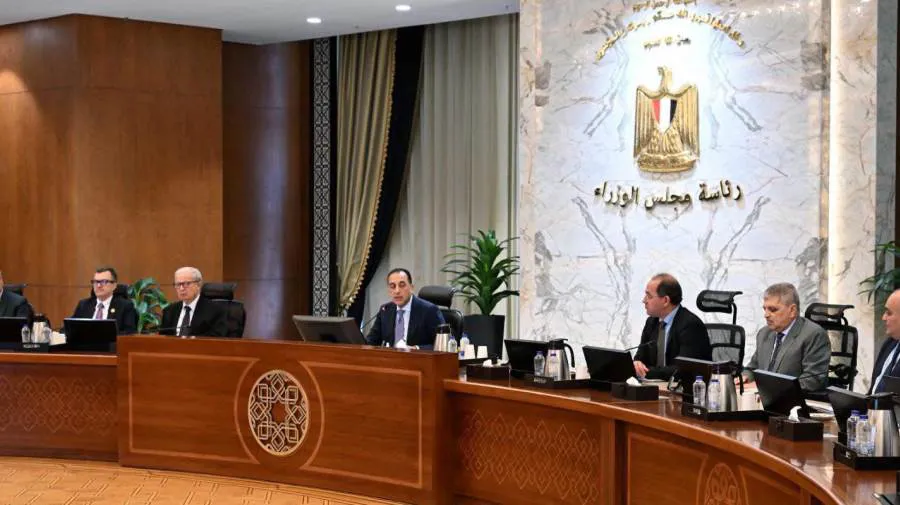
Prime Minister Mostafa Madbouly held a meeting today to review the themes of two sessions titled "Foreign Currency Resources and Debt Management" and "Outlines of Egypt's Economic Programme to 2030". The meeting is part of the follow-up on preparations for "Egypt Forum 2026", scheduled to take place in the New Capital from 19 to 24 October.
The meeting was attended by Hussein Issa, Deputy Prime Minister for Economic Affairs; Ahmed Kouchouk, Minister of Finance; Ahmed Rostom, Minister of Planning and Economic Development; Lt. Gen. Osama Rabie, Chairman of the Suez Canal Authority; Yasser Sobhy, Deputy Minister of Finance for Fiscal Policies; Rami Aboul Naga, Deputy Governor of the Central Bank of Egypt; Eng. Amr Nagaty, Permanent Undersecretary of the Ministry of Civil Aviation; and a number of officials from the relevant ministries and the central bank.
The Prime Minister opened the meeting by stressing that public debt management is one of the most important issues occupying the government at this stage. The government is continuing to work towards its target of sustaining the downward trajectory of external debt, maintaining this approach over the medium and long term, and attracting more direct investment into investment opportunities across a range of fields and sectors, helping to provide alternative sources of financing.
"Given this importance, and the debate around debt in the media, on talk shows and among citizens, one of the Egypt Forum sessions has been dedicated to discussing this issue in depth with economists and specialists," Madbouly said. "Through the working papers, we are committed to candour and transparency and to sharing views on the public's concerns and what Egyptian citizens think about this issue and the challenges it faces. We will come out of it with recommendations and outputs to draw on in managing public debt in the coming period."
He added that monetary policy plays a pivotal role in strengthening the stability of the Egyptian economy, and that effective coordination between the government and the Central Bank of Egypt has delivered notable progress in boosting economic activity, encouraging private-sector participation, and increasing and diversifying foreign currency inflows, which strengthens the resilience of Egypt's financial markets. Reviewing and discussing the work in this area is therefore one of the priorities the forum's sessions will focus on.
The meeting also reviewed the outlines of the National Programme for Economic Transformation, currently being prepared in ongoing coordination between the government and the central bank. Because the programme is also attracting considerable interest, it will be presented at the forum's sessions and opened up for discussion.
Against this background, the meeting heard several interventions on all matters related to the two sessions' agenda. Many questions and economic concerns of interest to Egyptian citizens, as well as to experts and specialists, were raised, along with the state's direction on them in the coming period. Participants confirmed that the conference will provide full answers to all these questions and clarify the state's position and direction on the various issues.
Closing the meeting, the Prime Minister directed that everything being raised in these days about the state's foreign currency resources, the size and impact of public debt, and the National Programme for Economic Transformation be monitored, so that the government can grasp all of Egyptian citizens' concerns and respond to them during the Egypt Forum 2026 sessions. "By the end of the conference, we must have decisions, plans and executive programmes that help improve citizens' living conditions in the coming period," he said.
Comments
No comments yet. Be the first!