

Ahmed Attia, Deputy Assistant Chairman of Egypt’s Financial Regulatory Authority (FRA), said the authority, chaired by Islam Azzam, is taking measured steps to modernize regulatory reporting mechanisms by gradually moving from daily and monthly reporting to a real-time reporting system.
The transition follows FRA Board Decisions Nos. 174 and 175 of 2026, which require consumer finance and microfinance providers to establish real-time connectivity with the credit bureau, and FRA Chairman Decision No.
2864 of 2026, which requires consumer finance companies to connect their databases to the authority’s database.
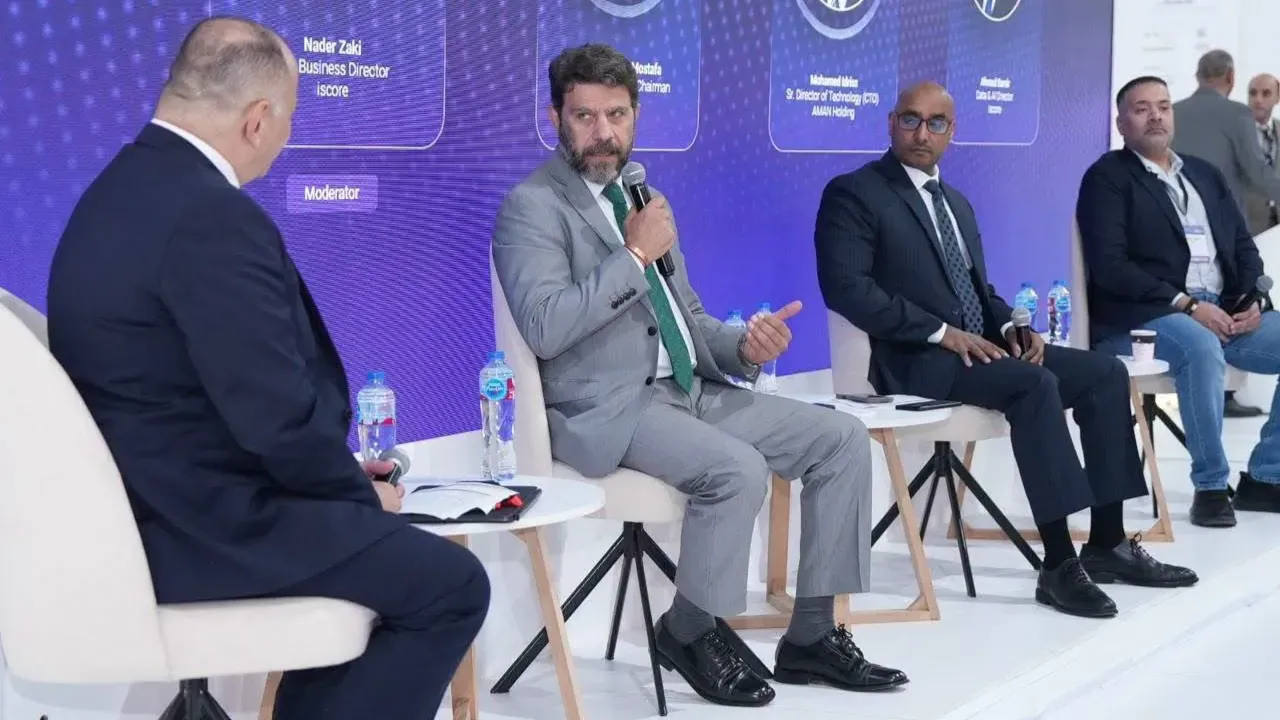
Attia made the remarks during a panel discussion titled “Real-Time Reporting: Real-Time Data for Real-Time Decisions,” held at the Egyptian Credit Bureau’s (i-Score) pavilion during Cairo ICT 2026, with the participation of technology and data experts.
He explained that reliance on daily reporting previously created a time gap that allowed some customers to obtain multiple financing facilities from different providers within short periods, before their credit information was updated at the end of the day. This could result in borrowing beyond safe credit limits.
Attia added that real-time reporting provides regulators and financing providers with a comprehensive, up-to-date picture, helping prevent excessive lending, improve financing decisions, and protect all participants in the system against default risks.
He highlighted the regulatory measures issued by the FRA this year concerning consumer finance and enterprise financing. He stressed that every regulatory decision undergoes a rigorous process, beginning with field studies and gap assessments, followed by extensive stakeholder consultations to assess institutions’ technological readiness and infrastructure.
Attia emphasized that the regulator’s role extends beyond inspection and penalties to guidance and support. He noted that the authority’s decisions provide companies with appropriate transition periods to meet new requirements and establish the necessary technological infrastructure.
During these periods, the FRA also organizes capacity-building sessions, issues guidance manuals, and provides assistance to ensure cybersecurity readiness and clearly define connectivity mechanisms and data requirements, reflecting its commitment to supporting market participants.
Discussing the strategic benefits of technological transformation in non-banking financial activities, Attia said prompt compliance gives the FRA a broader and more accurate nationwide view of each activity. This supports the early detection of financial fraud and emerging risks, limiting their adverse effects on financial activities and market participants.
FRA Decisions Nos. 174 and 175 of 2026 require companies and entities operating in consumer finance and medium, small, and microenterprise financing to establish real-time connectivity with the credit bureau. They must report immediately upon approving and disbursing financing, receiving any full or partial repayment, closing a financing facility, initiating judicial or legal proceedings relating to financing, and any change in a customer’s status concerning those proceedings.
The two decisions, published in the Egyptian Gazette on September 10, granted providers operating in both activities three months to complete the procedures required to establish electronic connectivity with the credit bureau.
Meanwhile, FRA Chairman Decision No. 2864 of 2026 requires consumer finance companies to provide the technological infrastructure needed to connect their databases to the FRA’s database.
The required information includes customer data immediately upon financing approval; real-time data on customers’ purchases of goods or services; classifications of the goods and services financed; customers’ repayment performance classifications; and information on the company’s financial solvency.
These requirements will be governed by rules to be issued by the FRA within six months of the decision’s effective date of September 24.

Comments
No comments yet. Be the first!