
Egypt Targets $78 Billion in Cumulative Net FDI Inflows Under Investment Promotion Strategy Through 2030
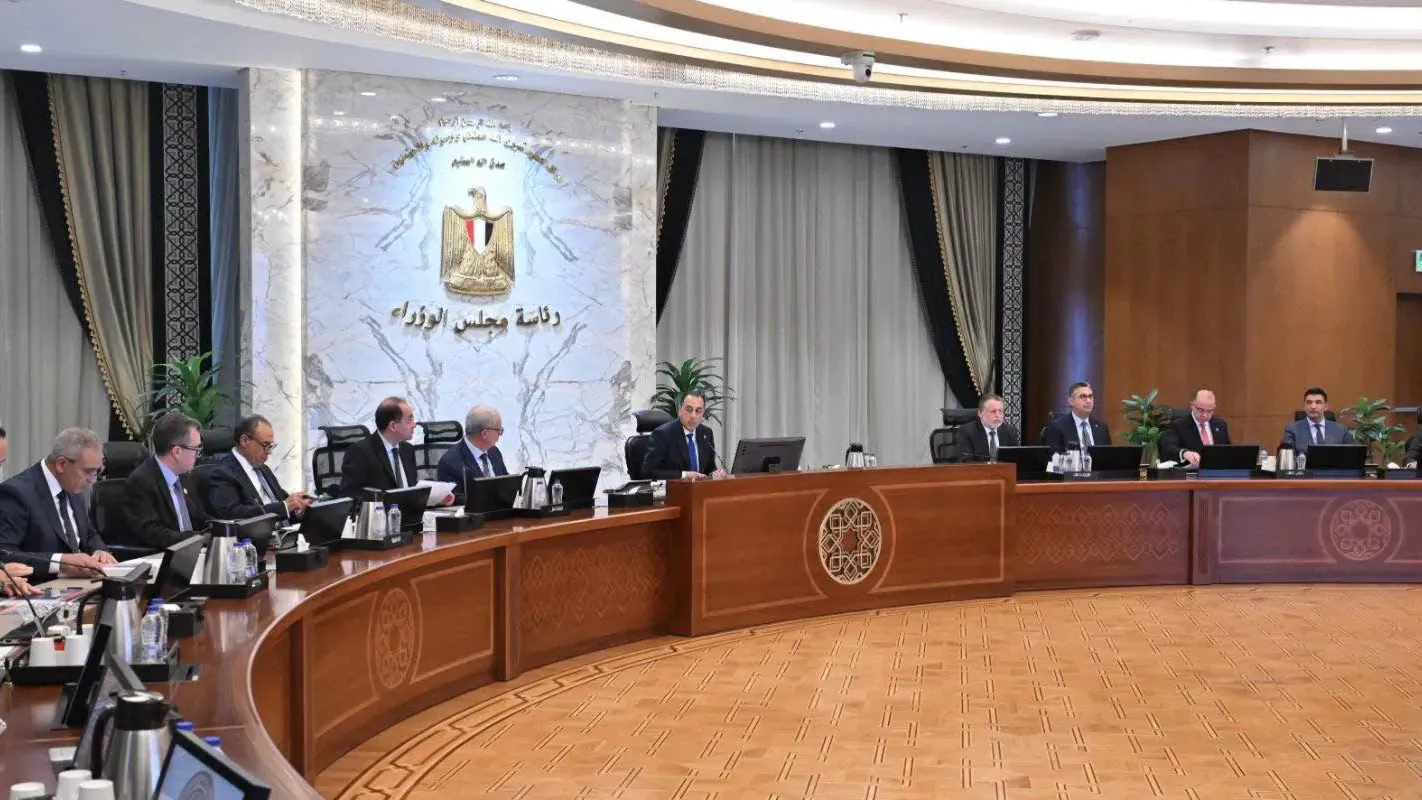
Prime Minister Mostafa Madbouly chaired a meeting of the Economic Group today at the government headquarters in the New Capital.
The meeting was attended by Hussein Eissa, Deputy Prime Minister for Economic Affairs; Hassan Abdalla, Governor of the Central Bank of Egypt; Ahmed Kouchouk, Minister of Finance; Sherif Farouk, Minister of Supply and Internal Trade; Badr Abdelatty, Minister of Foreign Affairs, International Cooperation and Egyptian Expatriates; Mohamed Farid Saleh, Minister of Investment and Foreign Trade; Ahmed Rostom, Minister of Planning and Economic Development; Khaled Hashem, Minister of Industry; Rami Aboul Naga, Deputy Governor of the Central Bank of Egypt; and several officials.
During the meeting, Mohamed Farid Saleh reviewed progress on Egypt’s foreign direct investment promotion strategy, explaining that its preparation had been completed in cooperation with the World Bank Group and with input from relevant ministries and agencies, alongside consultations with private sector institutions and business associations.
These consultations aimed to build consensus on priority sectors, required reforms and the strategy’s implementation framework. He added that an agreement had been reached with the World Bank Group to translate the strategy into an implementation plan through 2030, specifying the necessary reforms, responsible entities, timelines and performance indicators.
The Minister of Investment and Foreign Trade noted that global FDI trends show developing countries receiving 55.5% of worldwide FDI flows. He said Egypt ranked as Africa’s leading FDI destination in nine of the past ten years, from 2016 to 2025, and ranked third among Arab countries after the United Arab Emirates and Saudi Arabia.
He added that Egypt accounted for 22.2% of FDI flows to Africa and 0.95% of global flows in 2025. Investment inflows to Egypt also grew by approximately 3.2% compared with 2024, excluding exceptional transactions.
The minister explained that the strategy seeks to attract FDI that boosts productivity, increases exports and creates more jobs. This will be pursued through effective investment promotion, identifying priority sectors and target markets, and initially promoting sectors that are most ready to attract investment.
The strategy also includes preparing investment opportunities for offering to investors and implementing a government-led sectoral reform plan encompassing the programmes and policies needed to achieve its targets. These efforts aim to support private sector-led economic growth and raise private investment’s share of total investment to 67% by 2030.
Priority sectors have been divided into two phases. The first covers sectors most ready for promotion, including spinning, weaving and ready-made garments; chemicals; agricultural and food processing; electronics manufacturing; outsourcing, telecommunications and information technology services; and new and renewable energy.
The second phase covers sectors requiring further reforms, including green hydrogen, hospitals and medical centres.
Farid also outlined the steps needed to complete approval of the strategy and its implementation plan, presenting examples of proposed reforms to attract further investment into the targeted sectors.
Regarding the strategy’s quantitative targets, the minister said Egypt aims to attract $78 billion in cumulative net FDI inflows between fiscal years 2026/2027 and 2029/2030, describing the target as both ambitious and realistic.
At the conclusion of the presentation, the prime minister directed the Minister of Investment and Foreign Trade to translate the strategy into clear, specific action plans for each ministry, to be implemented in coordination with the investment ministry. He stressed that the plans and their implementation progress would be reviewed every three months to ensure the targets are met.
During the meeting, the Minister of Foreign Affairs, International Cooperation and Egyptian Expatriates reviewed ongoing cooperation with the World Bank Group and several international financial institutions and banks. This cooperation covers financing development policies, strengthening the private sector’s role, supporting budget sustainability, and maximising the benefits of concessional financing and development cooperation projects.
He also highlighted the outcomes of his recent visit to Kuwait, including discussions on advancing investment between the two countries across various sectors, particularly Kuwaiti investment in Egypt.
The Minister of Investment and Foreign Trade also presented a report assessing the economic and fiscal impact of Egypt’s free zones and comparing the Egyptian experience with leading competing international models.
The report forms part of efforts to develop an objective framework for assessing applications to establish new private free zones. The framework aims to balance investment attraction and export expansion with safeguarding public treasury revenues, directing investment towards targeted industries, increasing local content, creating jobs and maximising net foreign exchange earnings.
The minister reviewed overall performance indicators for Egyptian free zones through the end of June 2026, their impact on the economy during fiscal year 2025/2026, and their contribution to import substitution and increasing local content.
He also discussed how Egypt’s investment regimes complement one another and the role of free zones in supporting and sustaining the country’s investment and export base.
Farid presented a proposal to improve the criteria used to assess applications for new private free zones. He also reviewed efforts to develop an electronic governance system for free zones by integrating implementation, inspection, financial monitoring and administrative functions across the zones, helping unify databases and improve financial and administrative oversight.
The minister stressed that the free zone system is an effective economic tool for supporting exports, attracting investment, creating jobs and increasing the country’s foreign exchange resources, thereby strengthening Egypt’s competitiveness and supporting its economic development targets.
At the close of the meeting, Madbouly directed officials to study the investment ministry’s presentation on developing the free zone system and review its proposals. A meeting will be held next week to discuss feedback and agree on a final version before submitting it to the Cabinet for approval.

Comments
No comments yet. Be the first!