



U.S. Interest Rate Path Enters an Unprecedented Phase of Volatility Ahead of the December Meeting
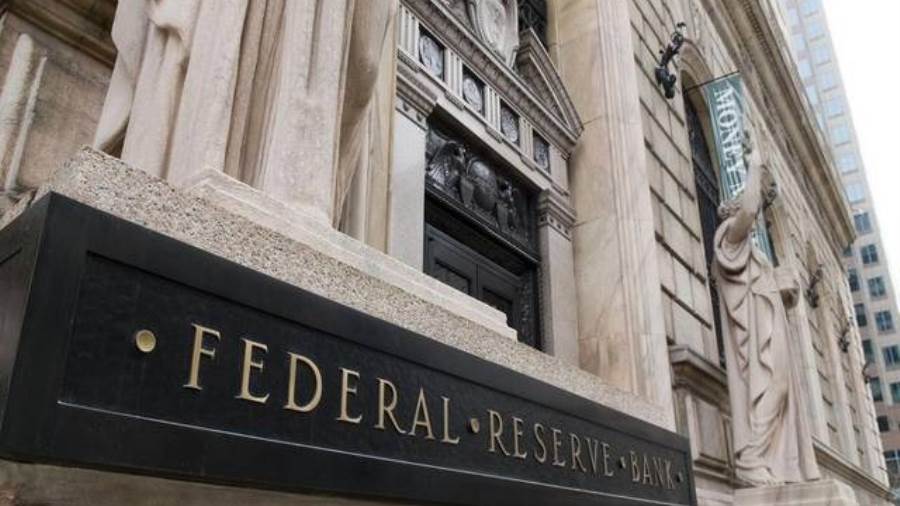
U.S. monetary policy is entering one of its most sensitive and volatile phases in decades, as an unstable economic backdrop intersects with direct political pressure from President Donald Trump, who is demanding sharp interest rate cuts next year. Against this backdrop, the Federal Reserve is preparing for its decisive December meeting amid rising internal divisions over the direction of future policy.


Economic Tensions and Political Interference
This complex landscape emerges at a time when the U.S. economy is facing multiple pressures, including delayed data releases caused by the government shutdown and a clear divergence between labor-market indicators and inflation trends. This mismatch has made economic assessment far more difficult for policymakers.
Meanwhile, financial markets are betting on aggressive rate cuts to support growth, while a faction within the Fed warns that such moves could reignite inflationary pressures.
Although President Trump expects the upcoming change in Fed leadership in May 2026 to pave the way for deeper rate cuts, divisions within the Federal Open Market Committee (FOMC) indicate that replacing the Chair alone will not be enough—especially amid growing concerns about the central bank’s independence.
2026: A Real Test for the Federal Reserve
U.S. reports suggest that 2026 may mark a new era in Fed decision-making, characterized by unusually tight and unpredictable voting outcomes, reflecting a decline in the consensus-driven approach that shaped Fed policy for decades.
These deepening divisions are likely to persist into next year, creating a monetary environment marked by uncertainty and competing policy narratives within the institution.
December Divisions: Cut or Pause?
Minutes from the Fed’s October meeting reveal a widening split among members regarding a December rate cut.
- Some policymakers support another reduction.
- Others argue that persistent inflation and incomplete economic data call for more caution.
This disagreement is intensified by missing key data—such as the October jobs report, which was not released due to the government shutdown.
The most recent committee vote reflects this fragmentation: one member supported a larger cut of 50 basis points, while others insisted on holding rates steady. This marks a clear departure from the historically unified decisions of the Fed.
Three Factions Shaping the Fed’s Future
Analysts identify three dominant camps within the Federal Reserve:
1. The Hawks
- They warn that cutting rates now risks re-igniting inflationary pressures.
2. The Doves
- They fear that delaying cuts could push the economy toward recession, especially as labor-market signals begin to weaken.
3. The Centrists
- They advocate patience and data-dependence before making any major move.
These internal divisions have intensified due to delayed data and technical issues affecting economic reports. As a result, market expectations for a series of rapid rate cuts have sharply declined.
Next Year: Limited and Gradual Rate Cuts
Current projections suggest that 2026 is more likely to see limited, spaced-out cuts, perhaps one or two at most—contrary to earlier expectations of aggressive easing.
Potential fiscal changes, including new trade measures or increased government spending, could further complicate the Fed’s challenge of containing inflation.
The Federal Reserve now stands at an unprecedented crossroads where economic realities collide with political pressures, and inflation concerns overshadow market expectations.
What is clear is that the path toward lower interest rates will not be straightforward. Any move will depend on the availability of reliable economic data that can convince the divided committee to act in a unified direction.
With internal splits expected to continue into 2026, U.S. monetary policy is entering a phase that demands exceptional caution and decision-making within one of the most complex environments the Fed has faced in decades.