


IMF: Global Growth Forecasts Cut Amid Iran War Risks to the Global Economy
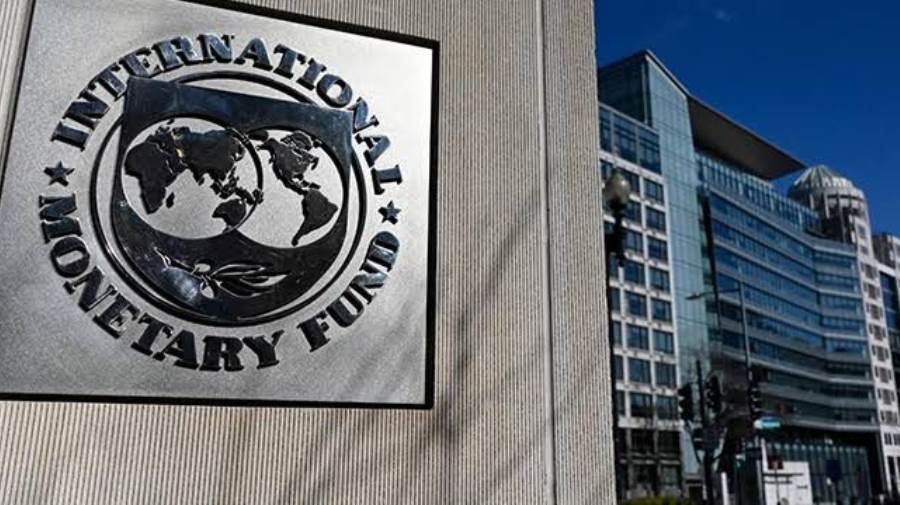
The International Monetary Fund has warned of widening economic repercussions from the ongoing conflict in the Middle East, noting that only a limited number of countries may be able to avoid its impact. The Fund highlighted expectations of slowing global growth alongside rising inflationary pressures.

Revised Global Growth Outlook
The IMF has lowered its global growth forecast to 3.1%, down from 3.3% in its January projections, primarily due to the economic fallout linked to the conflict involving Iran.
It further cautioned that if the war persists, global growth could decline to around 2%, a historically rare and significantly weak level.
Inflation and Energy Crisis
The IMF raised its global inflation forecast to 4.4%, marking an increase of 0.6 percentage points compared to previous estimates, driven largely by rising energy prices.
Despite describing the current situation as one of the most severe energy crises in modern history, the Fund noted that its impact remains less intense than the oil shocks of the 1970s, due to:
- Greater diversification of energy sources
- Reduced dependence on oil
- Improved global economic efficiency
- Diverging Impact Across Economies
Advanced Economies:
- United States: Among the least affected, with projected growth of 2.3%
- United Kingdom: Most impacted, with growth at 0.8%
- Eurozone: Slowing to 1.1%
Emerging Markets:
- China: Slight decline to 4.4%
- India: Rising to 6.5%
- Brazil: Growth at 1.9%
- Russia: Improving to 1.1%, supported by energy revenues
Most Affected Region
The IMF identified the Middle East, North Africa, and Central Asia as the most heavily impacted regions, with sharply downgraded growth forecasts and potential economic contractions in some countries due to direct war-related effects.
Economic Analysis
These projections reflect a high degree of global uncertainty, where geopolitical tensions are increasingly intertwined with economic dynamics, leading to:
- Broad-based slowdown in global economic activity
- Persistent inflationary pressures driven by energy costs
- Uneven capacity across countries to absorb economic shocks
Energy-exporting economies may benefit relatively, while energy-importing countries are expected to bear the brunt of the crisis.
The IMF emphasized that the global economic outlook will remain highly dependent on developments in the Middle East. Containing the conflict will be critical to mitigating growth slowdown and easing inflationary pressures.